Climate is the perennial mode of weather characteristic of a certain area. The word “climate” was introduced by the ancient Greek astronomer Hipparchus, who proved that the angle of the sun’s rays, varying from the equator to the poles, determines the weather conditions of an area. Climatology is the science that deals with the study of climate. The main parameters of the climate are temperature, amount, and mode of precipitation. Climate, unlike the weather, is characterized by relative stability, but it is also subject to change.
Each territory on the Earth’s surface is characterized by its own climate. The climate varies by latitude (from the equator to the poles), but even within the same latitude, there are differences – when moving from the coasts into the interior of the continent. Research by scientists shows that our planet’s climate has changed repeatedly and dramatically over its long history. Warming climates were replaced by cooling and even prolonged ice ages. This has led to an increase or decrease in the climatic belts and regions, a change in their size, or a shift toward the equator or the poles.
FactorsofClimateChange
The geographic latitude of the area is the main factor in the formation of the climate. It determines the angle of incidence of sunlight, the duration of illumination, the amount of solar heat, and, consequently, air temperature.
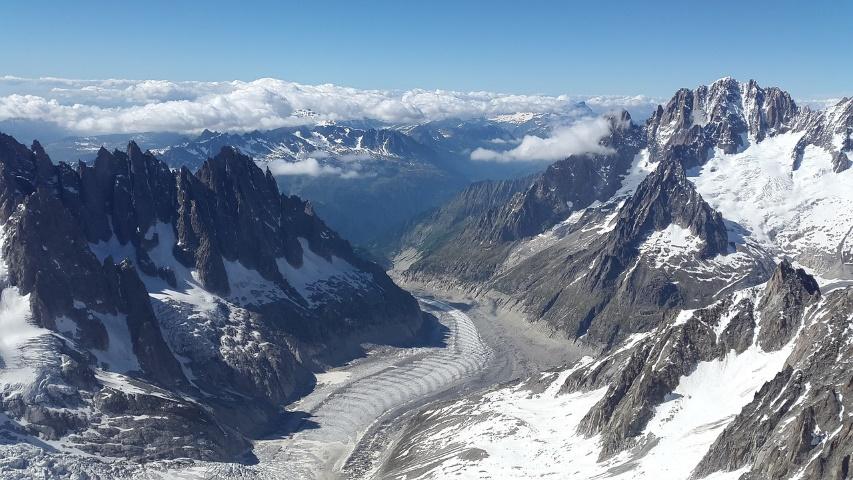
Since the geographic latitude and air temperature change from the equator to the poles, all other meteorological parameters and the climate as a whole change naturally. The difference in solar radiation at different latitudes directly affects atmospheric pressure and the global process of atmospheric circulation. Constant and seasonal winds influence the movement of air masses and heat and moisture.
The nature of the underlying surface has a huge impact on the climate. Land and water heat up and cool down at different rates. The oceanic climate is characterized by small temperature amplitudes, high cloudiness, and abundant precipitation. The continental climate is characterized by large daily and annual temperature amplitudes, less cloudiness, and precipitation. The farther inland, the greater the temperature variation, the less cloudiness and precipitation. The coastal climate is influenced by ocean currents, which in turn depend on atmospheric air circulation. Warm currents make the coastal climate warmer and more humid than in the interior of the continents.
SolarRadiation
Geographic latitude plays a major role in shaping the climate. It is the angle of incidence of the sun’s rays, and therefore the amount of solar radiation received by a particular area. Solar radiation is the radiation of the sun, light, and heat.
One two-billionth of solar radiation reaches the Earth’s surface. Part of the solar radiation reaches the Earth’s surface in its unchanged form – this is direct radiation. Another part is scattered as it passes through an atmosphere saturated with dust particles, water vapor, ice crystals, and water droplets. The greater the cloudiness and dustiness of the atmosphere, the greater the scattering of radiation. Scattered radiation – solar radiation that has undergone scattering in the atmosphere. All radiation reaching the Earth’s surface forms the total solar radiation. Part of the radiation is reflected from the Earth’s surface. For example, freshly fallen snow reflects up to 90% of total radiation, sand up to 40%, cropland up to 5%, water about 5%. The remaining part, called is absorbed by the earth’s surface (absorbed radiation). The heated surface of the Earth itself becomes a source of thermal radiation, i.e. part of the Earth’s heat escapes into outer space.
RadiationBalance
Radiation balance is the difference between the heat fluxes of solar radiation. Radiation balance is a part of solar energy is spent for heating of surface layer, for snow melting, and for evaporation. Radiation balance determines the most important climatic indicator – air temperature. The value of radiation balance depends on the latitude.
WhatIstheRateofTemperatureIncrease?
The estimate is as follows: over 100 years, the temperature has increased by 0.7 degrees. It seems that the figure is very small, it is in fact very small, but it can not be estimated by its absolute value. The thing is that the importance of certain changes is determined by the climatic significance of this value. In this case, it would seem that those small few tenths of a degree pull a very serious change in the state of the environment, and we see these changes, which are precisely due to climate change.
TheImportanceofTheProblem
In recent decades, humanity has made great strides in overcoming the problem of poverty and improving the well-being of a large part of the population in developing countries. The transition of the mass of the population from the lower to the middle class is accompanied by a change in consumer behavior patterns. Consumption of energy-intensive goods is increasing, and as a consequence, there is a jump in energy consumption and in greenhouse gas emissions.
The current international climate regulatory system is not conducive to overcoming this contradiction. Today, global climate change governance relies on estimates of countries’ aggregate emissions without taking into account the level of development of states and the distribution of emissions by income groups within each country. Emissions from production are taken into account, while the aspect of consumption-related emissions is known but not taken into account in practical terms. Meanwhile, it is greatly influenced by the distribution of income. Decisions to regulate emissions are made at the national level by countries with significant differences in the current development agenda, where the tasks of combating climate change are often inferior to those of addressing other socio-economic issues.
Thus, the global community now recognizes that climate change will negatively affect the poorest people, and scientists, politicians, and various societies are trying to address the problem in several ways. So I really hope that you enjoyed my article and that you fully understand what climate change is.